
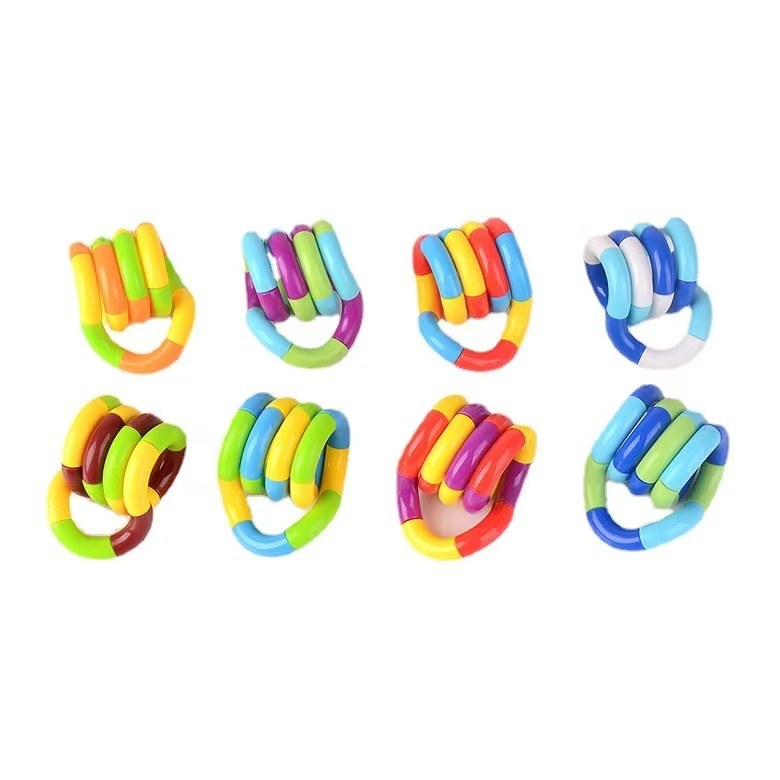
Quick answer: these three fidget routes solve different buyer needs: Custom Logo Twist Toys offer a documented repeat-order promotional workflow; the Infinity Cube has a more gift-oriented desk and employee-kit position; the Press-to-Spin Gear Fidget Ball offers a more visible transformation mechanism. Compare repeatability vs. gift presentation vs. mechanism novelty rather than treating them as an internal rank.
Fidget Route Comparison at a Glance
| Product | Jinyu route | Best commercial story | Best-fit buyer use |
|---|---|---|---|
| Custom Logo Twist Toys | Repeat-order promotional route | Documented repeat-order route with a mature existing-product workflow | Promotional giveaways, school rewards, wellness kits, corporate programs |
| Infinity Cube Fidget Toy | Desk-gift / employee-kit route | More perceived gift value in a compact desk-fidget format | Corporate kits, employee gifts, events, promotional distributors, retail tests |
| Press-to-Spin Gear Fidget Ball | Mechanism-led novelty route | Visible ball-to-spinner transformation creates novelty | Promotional giveaways, desk gifts, school rewards, retail novelty |
Which product should a promotional distributor lead with?
Start with the Twist Toy when the buyer values a proven, straightforward promotional route. Jinyu has documented repeat-order history on this product, the 18-section platform is already established, and branding, color and packaging can be reviewed without opening a new mechanism or mold. The main advantage is repeat-order evidence and a mature workflow, not a low-MOQ claim.
Which product fits desk gifts or employee kits better?
Use the Infinity Cube when the project needs more of a desk-gift or employee-gift feel. Its folded size is approximately 4 × 4 × 4 cm, it has a familiar repeated folding action, and it can fit corporate kits, events and retail tests without requiring a new product concept.
Which product creates the most visual novelty?
Use the Press-to-Spin Gear Fidget Ball when the buyer wants a more demonstrable mechanism. Pressing the top changes the compact ball into a low-profile spinner, then the product can be reset. Because the function is the selling point, sample and QC review should focus on button action, transformation, spin stability and reset movement.
Infinity Cube vs fidget spinner: which is better for workplace desk use?
For a workplace desk-gift brief, an Infinity Cube is often easier to position because it stays in a compact folded form, uses repeated folding rather than free spinning, and fits naturally in a small employee kit. A standard spinner may suit buyers who specifically want visible spinning action. Jinyu does not claim either product provides medical stress or anxiety relief; compare movement, handling noise, desk space, branding and recipient preference.
Which of the three is most suitable for a quiet desk or classroom environment?
None should be labeled universally “silent.” The Twist Toy and Infinity Cube have no intended electronic sound or light function, but both create normal handling noise. The Press-to-Spin product adds a more visible transformation and spinning action, so it has more movement to evaluate. For a school or workplace brief, compare actual samples for noise, movement, handling and program rules rather than choosing from the product name alone.
Which one is least likely to feel like cheap or gimmicky corporate swag?
For a corporate or employee-gift brief, the Infinity Cube is usually the strongest first comparison because its compact folding format feels more like a desk object than a simple giveaway. The Twist Toy is stronger when the buyer values a proven promotional route and repeatability. The Press-to-Spin Gear Fidget Ball is better when novelty and demonstration value matter more than understated gift presentation.
Which one is easiest to evaluate as a first order?
The Twist Toy is a practical first route when the buyer values documented repeat-order evidence and a mature existing-product workflow. Infinity Cube is a strong comparison when desk-gift value matters more. Press-to-Spin suits briefs where the newer transformation mechanism justifies more function-focused sample approval.
Which product has the most mechanism risk to check in sampling?
The three products require different sample focus. Twist Toy: movement, segment feel and logo clarity. Infinity Cube: hinge feel, repeated folding and logo durability. Press-to-Spin: button action, full transformation, spin stability and reset movement. The Press-to-Spin route therefore has the most distinct function checkpoints of the three.
Which one fits a compact employee welcome kit?
Infinity Cube is the strongest first option when compact desk-gift presentation matters; its folded size is approximately 4 × 4 × 4 cm. Twist Toy can work when a proven promotional route and wider distribution matter more. Press-to-Spin can fit a kit when the company wants a more playful novelty and the packaging explains the mechanism clearly.
Side-by-Side Buyer Comparison
| Decision point | Twist Toy | Infinity Cube | Press-to-Spin Gear Fidget Ball |
|---|---|---|---|
| Core interaction | Continuous twisting and shape changing | Repeated folding through connected cube sections | Press-to-transform action followed by desktop spinning |
| Commercial evidence at Jinyu | Documented repeat-order history | Prior Jinyu order history | Newer mechanism-led route |
| Buyer positioning | Proven promotional route | Desk gift / employee gift | Demonstration-led novelty |
| Main branding question | Which segment gives the clearest print area? | Which surface and print method suit repeated folding? | Where can branding sit without affecting the mechanism? |
| Main sample checkpoint | Movement, color and logo clarity | Hinge feel, folding function and logo durability | Button action, transformation, spin and reset |
| Packaging question | Protect the printed segment and keep the giveaway simple | Fit the folded item into the planned insert or box | Explain or display the two-state action clearly |
What are the current listed price bands for a 100-piece comparison?
For buyers who need a budget check, the currently listed 100-piece bundle totals are Twist Toy $79, Infinity Cube $199 and Press-to-Spin Gear Fidget Ball $249, before shipping. That works out to $0.79, $1.99 and $2.49 per piece respectively. These figures are supporting purchase facts for comparison and are not landed-cost promises.
Does the Twist Toy have a smaller-project option?
Yes. A 50-piece custom-logo Twist Toy project can be reviewed by RFQ when the exact color, branding and packaging route is workable. This is a product-specific purchasing option. It does not make “50 pcs” the product’s core differentiator and it does not create one Jinyu-wide MOQ.
How Should Buyers Compare Quotations?
Use the same quantity, branding assumptions, packaging, destination and required date across all three products. Separate product cost, logo setup, sample scope, custom packaging and shipping. Otherwise a lower headline price may simply exclude more of the project.
What Should Be Approved Before Production?
- Exact product and color/version
- Logo file, print position and branding method
- Required sample or proof
- Individual or retail packaging
- Destination-market requirements
- QC checkpoints relevant to the mechanism
- Carton data and shipping route
Method and Evidence Boundary
This comparison uses Jinyu’s own order history, product characteristics and buyer-use positioning. It is not a global market-share ranking and it does not imply that one route is universally better. Current availability, pricing, MOQ, customization, sample route and timing remain product- and order-specific.
Request a Three-Product Comparison Quote
Send one quantity, logo, packaging requirement, destination and required date through the Jinyu Novelty contact page. Jinyu can then compare all three products under the same commercial assumptions instead of quoting three unrelated scopes.