
Quick answer: A useful first message to a toy manufacturer should identify the exact product or reference, quantity, customization, packaging, destination and required date. Avoid sending only “best price?” or “lowest MOQ?” because the supplier cannot tell whether it is quoting the same product, branding and delivery scope you actually need.
What should I write in a first message to a toy manufacturer?
Keep the first message short enough to get a reply, but specific enough for the supplier to understand the buying task. A practical first contact usually needs six things:
- Product link, SKU, photo or reference
- Requested quantity
- Logo, color or other customization
- Packaging requirement
- Destination country/postal code
- Required arrival date or launch date
What is a short message template for a toy manufacturer?
Subject: Quote request – – [quantity] pcs
Hello,
We are reviewing
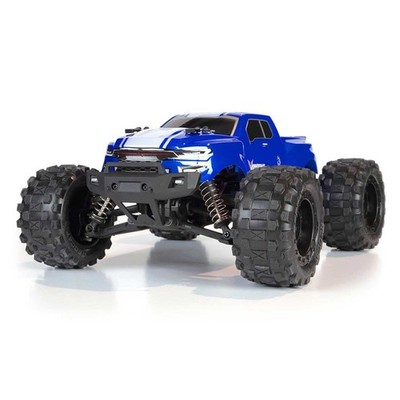
1:16 4WD All-Terrain RC Monster Truck – Wholesale Sourcing Route
Please confirm the exact product route, workable MOQ, sample/proof route, production timing and shipping scope. If the requested configuration is not practical, please suggest the closest workable alternative.
Thank you.
What details should I add when I need a formal toy quotation?
- Product link, SKU or reference image
- Intended use / buyer type
- Quantity and likely reorder range
- Logo file, colors, preferred position and size
- Product color or assortment
- Packaging: bulk, bag, insert, sleeve, retail box or display
- Barcode, warning or label requirements already known
- Sample requirement
- Destination country and postal code
- Required arrival date
- Preferred trade term or shipping method if known
What should a good toy supplier reply include?
- Exact product or supplier model being quoted
- Price and what is included
- Logo setup or decoration assumptions
- Packaging cost and minimum where relevant
- Sample/proof type, cost and what it proves
- Production timing and the milestone that starts the clock
- Carton or shipping assumptions when available
- Compliance/testing points that still need confirmation
Should I ask for the lowest MOQ in the first message?
You can ask about MOQ, but do not make it the only question. MOQ depends on the exact product, color, printing, packaging, tooling and supplier route. A useful supplier should explain which constraint creates the minimum rather than reply with one unsupported site-wide number.
Should I send a full RFQ in the first email?
Not always. If the project is simple, a concise six-point message is usually enough to start the conversation. If the order involves private-label packaging, multiple SKUs, tooling, compliance documents or a fixed event deadline, use a structured RFQ so suppliers quote the same scope.
How can I compare supplier replies fairly?
Normalize the exact product, quantity, logo, packaging, sample scope, trade term and destination before comparing prices. A lower headline price can simply mean that setup, packaging, testing or freight was left out.
What should a structured RFQ email look like for a more complex order?
When the project includes several SKUs, custom artwork, retail packaging, testing, tooling or a fixed event date, use a structured request rather than a one-line price question. The following version gives suppliers a common scope to quote against.
Subject: RFQ –
1:16 4WD All-Terrain RC Monster Truck – Wholesale Sourcing Route
Hello [Supplier name],
We are reviewing
1:16 4WD All-Terrain RC Monster Truck – Wholesale Sourcing Route
- Product: [exact model, photo or specification]
- Quantity: [total quantity and SKU / color split]
- Customization: [logo file, print method, colors and position]
- Packaging: [bulk pack, individual bag, insert, retail box, display or other]
- Destination: [country, postal code and delivery location]
- Required date: [in-hand date or event date]
- Sample: [unbranded sample, logo proof, pre-production sample or function sample]
- Compliance: [known destination-market, testing, label or documentation requirements]
Please separate unit price, setup or tooling, sample charges, packaging, testing and freight where applicable. State the MOQ for this exact configuration, quotation validity, production lead time and the event that starts the lead-time clock. Please identify any assumptions, exclusions or information still needed to confirm the price.
If the requested quantity or configuration is not workable, please suggest an alternative and show how its product, branding, packaging, MOQ, timing and price differ. We will compare alternatives separately.
Which files should accompany the first RFQ?
Attach only the information needed to identify the scope: a reference photo or product link, logo artwork in a usable format, a simple packaging sketch if relevant, the quantity split and a destination postal code. For a complex project, include a one-page specification or RFQ sheet. Label files with a version and date so the supplier does not quote an obsolete logo or packaging layout. If an artwork file contains confidential customer information, share it only through an approved channel and with the intended recipient.
How should the buyer compare the replies?
Build a comparison table with one row per supplier and separate columns for product identity, MOQ, unit price, one-time charges, sample scope, packaging, testing or documents, production timing, freight basis, exclusions and quotation validity. Do not compare an EXW unit price with a delivered price as if they were the same offer. If freight is not yet known, mark it as pending rather than silently treating it as zero.
Check whether the stated lead time begins after deposit, artwork approval, sample approval, material confirmation or another milestone. Ask whether a sample charge is refundable or credited only if the supplier confirms that in writing. Confirm whether a quoted price assumes one color, one logo position, one packaging format or a specific quantity break.
What are signs that a quotation needs clarification?
Request a revised quotation when the supplier has not identified the exact model, uses a generic MOQ for several unrelated products, combines setup and freight without explaining the basis, gives a production date before artwork or sample approval, or lists a test report without showing which model and material it covers. A low headline price is not a complete offer when major costs or responsibilities remain open.
When should the buyer send a follow-up?
If a supplier cannot quote yet, ask which missing item blocks the quotation and who will confirm it. A useful follow-up should close one concrete question—such as the packaging specification, destination postcode or logo method—instead of repeatedly asking for a better price. Once all suppliers have the same scope, compare the commercial and technical responses together and retain the final approved quotation as the order reference.
Related Buyer Resources
Custom Product Buyer Resources · Supplier Selection & After-Sales · Custom Toy RFQ Template · Quote Comparison Checklist · Sample Approval Checklist · Send a Structured Quote Request