First-party manufacturing evidence
Capability evidence · not a customer order
In-House Bambu Lab P1S 3D Printing Sample Evidence
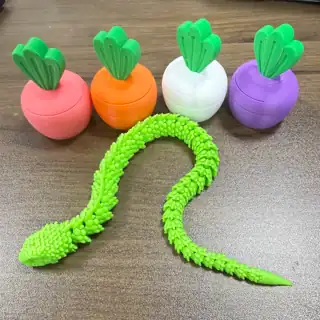
Quick answer: this page documents a real in-house 3D printing capability at Jinyu Novelty. The sample image was provided from Jinyu’s own printing work and shows actual FDM/FFF output produced using Jinyu’s Bambu Lab P1S equipment.
This is intentionally classified as capability evidence, not a customer case, completed sale, testimonial or proof of a universal production specification.
Verified Facts
- Equipment: Bambu Lab P1S owned and operated by Jinyu.
- Process: desktop FDM/FFF filament 3D printing.
- Nominal build volume: 256 × 256 × 256 mm.
- Current commonly used materials: PLA and PETG.
- Commercial role: prototypes, selected custom plastic parts, short runs and bridge-production review.
- Location: Jinyu Novelty operating base in Chenghai, Shantou, China.
What the Photo Proves—and What It Does Not
| Evidence | Supported conclusion | Not supported by this evidence alone |
|---|---|---|
| First-party sample photograph | Jinyu has produced physical FDM/FFF sample pieces using its in-house 3D printing route. | Customer identity, sales volume, repeat order history or a specific buyer endorsement. |
| Known equipment | Jinyu owns and operates a Bambu Lab P1S. | That every possible P1S material, setting or accessory is part of Jinyu’s routine commercial offer. |
| Current material practice | PLA and PETG are Jinyu’s commonly used material routes. | Which exact pictured object is PLA or PETG unless that part’s production record is separately retained. |
| P1S build volume | The printer has a nominal 256 × 256 × 256 mm build volume. | That every geometry up to those dimensions is automatically printable without orientation, support or machine-clearance review. |
| Printed sample quality visible in photo | The image provides a real visual reference for the type of FDM/FFF output Jinyu has produced. | A universal dimensional tolerance, strength, surface-finish grade or certified end-use performance. |
How This Capability Fits a Buyer Project
Prototype & Design Validation
Use a physical print to review overall shape, handling, component space, mating features or product direction before deeper tooling investment.
Low-Volume Custom Parts
Selected custom plastic parts can be reviewed when the requested quantity does not justify an injection mold and the geometry fits the P1S route.
Bridge Production
A limited printed batch can support buyer testing, exhibitions, photography, internal validation or temporary supply while a later manufacturing route is evaluated.
Prototype-to-Mold Transition
When a design becomes stable and repeat demand grows, the approved geometry can be reviewed for tooling and conventional OEM/ODM production rather than assuming FDM remains the final economic method.
What a Stronger Future 3D Case Record Should Add
This first evidence page deliberately avoids inventing production metrics that were not retained. Future project records should capture the data below so Jinyu can publish stronger first-party case evidence without relying on estimates.
- File name and revision.
- Part dimensions and quantity.
- PLA/PETG material used for the exact recorded batch.
- Print time and material consumption where available.
- Orientation, support and visible-surface decisions.
- Failed or revised print reason where relevant.
- Critical fit or assembly result.
- Buyer-approved changes between revisions.
- Whether the part stayed on the printed route or moved into tooling/mold production.
Evidence Boundary
This page is not presented as a customer order or testimonial. It does not establish a universal MOQ, lead time, tolerance, production rate, material certification or end-use suitability. Every commercial 3D printing project is reviewed against the exact file, quantity, material, geometry, destination and intended use.
Use This Capability in a Live Project
Prepare the file version, overall dimensions, quantity, intended use, critical fit features, material preference, destination and deadline before requesting a quotation.