
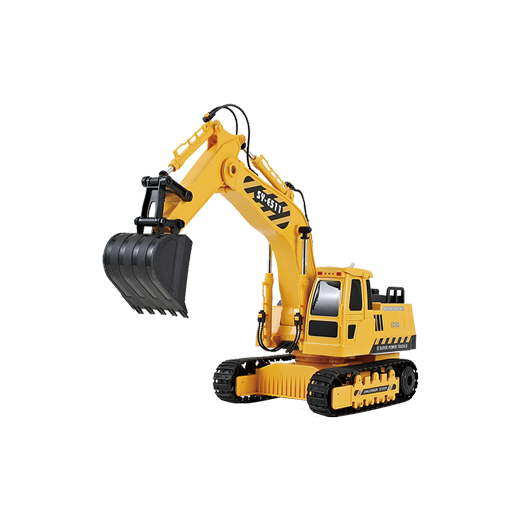
Quick answer: an RC toy can combine ordinary toy-safety requirements with radio/electronic rules and battery-transport obligations. The exact compliance route depends on the selected model, intended user, radio system, battery configuration, destination market and final packaging. Do not accept a generic “CE/FCC/ASTM certified” statement without matching the evidence to the exact RC configuration.
This checklist is a buyer-planning reference, not legal advice and not a declaration that every RC toy requires the same tests. Requirements change by market and product design, so final obligations should be confirmed for the exact SKU with the importer, test laboratory or appropriate compliance professional.
1. Lock the exact RC configuration before reviewing documents
Compliance review should identify:
- Exact vehicle and supplier model/SKU.
- Intended user and age grade.
- Controller/transmitter and receiver configuration.
- Frequency band / radio system used by the exact product.
- Vehicle battery chemistry, capacity and installation method.
- Controller batteries.
- Charging cable, adapter or charger included.
- Accessories and spare batteries in the retail set.
- Manual, warnings, labels and retail packaging.
- Destination country and importer/economic-operator requirements.
If the vehicle, controller, battery or charger changes, the relevance of the existing evidence must be reviewed again.
2. United States: toy safety is still model-specific
For children’s toys in the United States, the CPSC states that the mandatory toy safety rule is the version of ASTM F963 incorporated into 16 CFR Part 1250. CPSC guidance also explains that toys intended primarily for children 12 and under generally require third-party testing by a CPSC-accepted laboratory for applicable requirements and certification through a Children’s Product Certificate.
Battery-operated RC toys can trigger product-specific ASTM F963 sections in addition to general toy requirements. The applicable sections depend on the construction, age grade, battery system, moving parts and other hazards.
Official references: CPSC Toy Safety FAQ · CPSC ASTM F963 Requirements Chart.
3. United States: radio equipment must be reviewed separately from toy safety
An RC transmitter/receiver intentionally uses radio waves, so the radio/electronic compliance path should be checked for the exact equipment. FCC Part 15 covers intentional and unintentional radiators, with equipment-authorization and measurement requirements depending on the device and rule section. Do not assume that a report for one controller automatically covers a different transmitter, frequency, PCB or antenna design.
Buyer checklist:
- Identify the exact transmitter/controller and receiver used in production.
- Match any FCC test/equipment-authorization evidence to the actual configuration.
- Confirm required product/packaging/user-manual statements with the responsible party.
- Re-review the evidence after radio PCB, antenna, frequency or controller changes.
Official reference: FCC Part 15 measurement guidance.
4. European Union: RC toys can also be radio equipment under RED
The EU Radio Equipment Directive 2014/53/EU establishes the framework for placing radio equipment on the EU market. The European Commission states that RED addresses safety/health, electromagnetic compatibility and efficient use of radio spectrum. The consolidated directive also requires appropriate instructions and safety information; for intentionally transmitting radio equipment, information can include the operating frequency band(s) and maximum radio-frequency power, and radio equipment must be accompanied by an EU declaration of conformity or simplified declaration route as applicable.
For an RC toy, RED should be reviewed alongside the applicable toy/product-safety obligations rather than replacing them.
Official references: European Commission RED page · Consolidated RED text.
5. Battery documents are part of the product specification
RC vehicles commonly use disposable cells or rechargeable batteries. If lithium batteries are used, shipping requirements depend on whether the battery is installed in equipment, packed with equipment or shipped separately. IATA’s Battery Shipping Regulations cover classification, testing, packing, marking, labeling, documentation and acceptance requirements, including the UN Manual of Tests and Criteria subsection 38.3 framework.
IATA also notes that electronic equipment containing lithium batteries is classified as dangerous goods even where some shipments may qualify for simplified provisions, and that manufacturers/distributors should make available the relevant UN 38.3 test summary for applicable lithium cells/batteries.
2026 battery-transport updates include stricter charge-limit provisions for lithium-ion batteries packed with equipment, so a shipping method copied from an older order should not be assumed to remain valid.
Official references: IATA Battery Shipping Regulations · IATA Dangerous Goods FAQ.
6. Ask for a model-matched document pack
| Document / evidence | Buyer should verify |
|---|---|
| Toy safety report / certificate basis | Exact model, materials, age grade and applicable market requirements. |
| Radio / EMC evidence | Exact controller, receiver, frequency/radio system, PCB/antenna configuration. |
| Battery test summary | Exact battery manufacturer/type and UN 38.3 relevance where applicable. |
| Battery/charging specification | Battery chemistry, capacity, connector, included charger/cable and production configuration. |
| Declaration / certification documents | Correct legal manufacturer/importer/responsible-party information and exact product reference. |
| Manual / warnings | Age grade, battery handling, charging, radio/use instructions and market-language requirements. |
| Product / packaging labels | Required markings, model identification, traceability, importer/economic-operator information where applicable. |
7. Do not cross-use reports between “similar” RC cars
High-risk shortcuts include:
- Using a CE/RED report for a different transmitter or PCB.
- Using a battery test summary for a different battery cell or pack.
- Using an ASTM/CPSC report for a visually similar but different toy model.
- Changing charger, battery, motor/electronics or package contents without checking the document scope.
- Assuming a supplier logo/certificate badge on a marketplace image proves the final order configuration.
When a buyer needs formal evidence, the exact report number, model number and component configuration should be compared against the physical sample and production specification.
8. Sample approval should include compliance-relevant details
The pre-production or approved working sample can be used to freeze:
- Model number and product appearance.
- Controller and pairing behavior.
- Battery compartment and charging method.
- Battery/charger markings.
- Manual and warning text.
- Barcode/SKU and product identification.
- Retail package contents.
For function-led products, compliance review and QC should stay connected. A production run that substitutes a controller, battery or charger can become a different compliance configuration even if the car shell looks unchanged.
9. Shipping checklist for rechargeable RC toys
- Confirm whether the battery is installed, packed with equipment or separate.
- Confirm battery chemistry, Wh rating/capacity and exact manufacturer/type.
- Obtain the applicable UN 38.3 test-summary information where required.
- Confirm packing instruction and current carrier/airline restrictions with the freight provider.
- Check marking, labeling and documentation requirements for the shipment configuration.
- Do not assume the same route is valid after changing battery or pack-out.
10. Jinyu’s RC compliance boundary
Jinyu does not publish “all RC cars are CE/FCC/ASTM certified” language. Each buyer-ready RC model should have a defined supplier, vehicle/controller/battery configuration and destination. Existing evidence is reviewed against that configuration before it is represented in a quotation. Where the exact model, media or documents are still being qualified, the corresponding product route remains outside search indexing.
Send the RC model reference for review
If you are evaluating an RC car or controller-based toy, send the model link or photos, the radio and battery configuration if known, the destination market and the target quantity. Jinyu reviews the existing evidence against that exact configuration before it is represented in a quotation.
Send a product reference → · Request a compliance-sensitive quote →
Frequently Asked Questions
Does an RC car need both toy safety and radio compliance?
Potentially, yes. An RC toy can be subject to toy-safety requirements while its transmitter/receiver is also subject to radio/electronic requirements. The exact route depends on the market and model.
Is 2.4GHz automatically compliant in the US or EU?
No. A frequency description alone is not evidence of compliance. The exact radio equipment and applicable authorization/conformity assessment must be checked.
Does a UN 38.3 test summary prove the whole RC car is compliant?
No. It relates to transport testing of the lithium cell/battery type. It does not replace toy safety, radio, labeling or other product requirements.
Can one RC report be used for several body colors?
Sometimes a report can cover variants, but scope depends on whether the electronics, materials, battery, controller and other relevant features are identical and whether the report itself covers those variants. Verify rather than assume.
RC Toys Wholesale & Sourcing Hub → · RC sourcing guide → · Browse current RC sourcing routes →